
Contact
Exploring what it means to be connected without being overwhelmed.
Problem
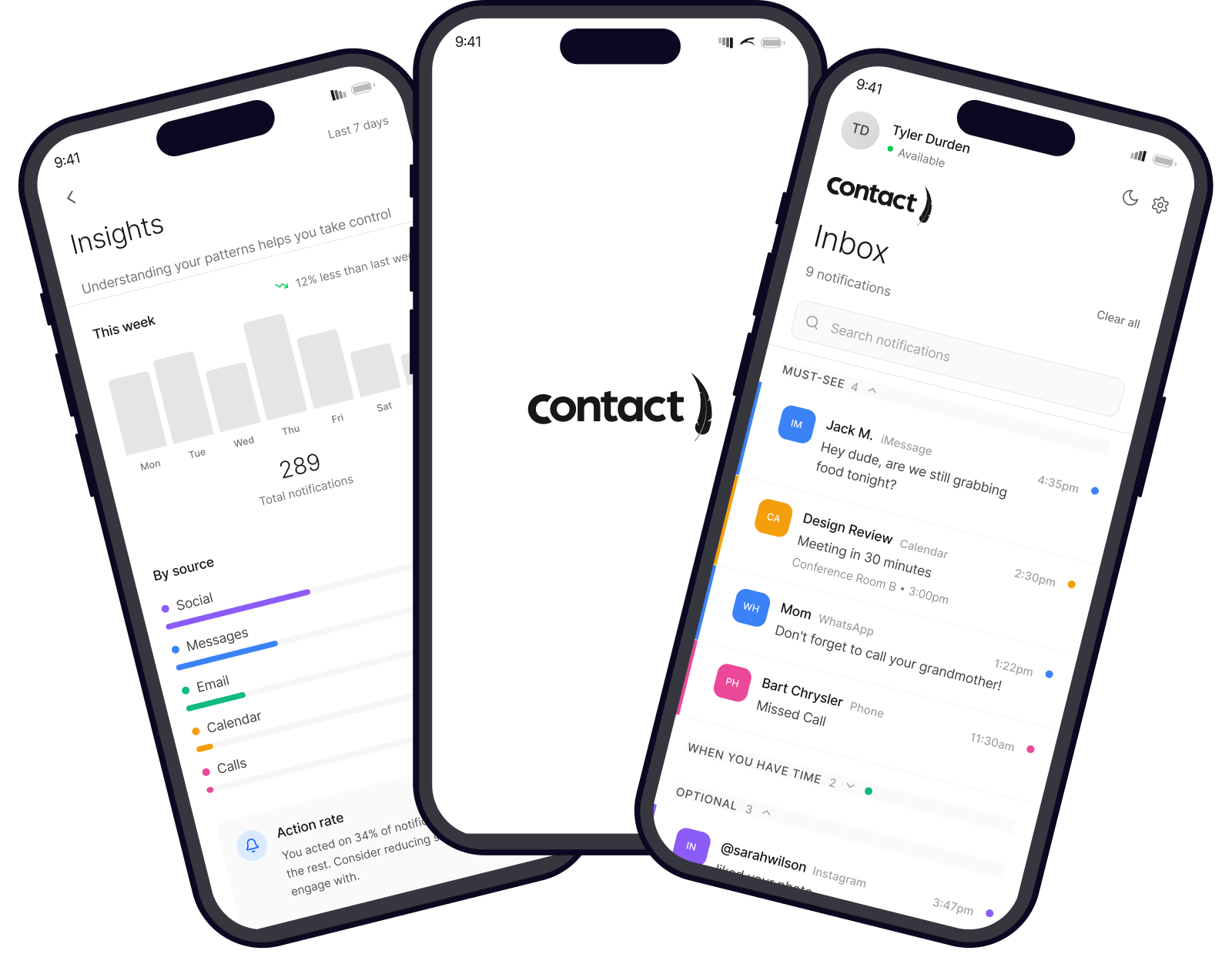
We don't lack ways to communicate. We lack a way to decide what deserves our attention, and when. Messages, notifications, and reminders arrive across too many surfaces, and opening any one of them usually pulls you deeper into its platform. The result is more distraction, not more connection.
This project explored whether being more intentional with our attention could improve how we experience life in an always-connected world.
Context and constraints
This was a self-directed concept project with no client, timeline, or predefined success metrics. That freedom made restraint the real challenge. The goal was not feature breadth, but coherence.
The design was shaped by a small set of constraints:
- Notification fatigue is already widespread and well understood
- Trust and privacy matter more than novelty in communication tools
- Any unified system must allow selectivity, not universal access
Research and signals
Rather than formal studies, I grounded the concept in:
- Daily patterns from my own use across email, messaging, and social platforms
- Informal conversations with peers about missed messages and notification overload
- Recurring themes from existing "unified inbox" tools that collapsed under their own complexity
A consistent signal emerged: people want fewer interruptions, not fewer connections.
Design approach
The core decision was to treat attention as a limited resource.
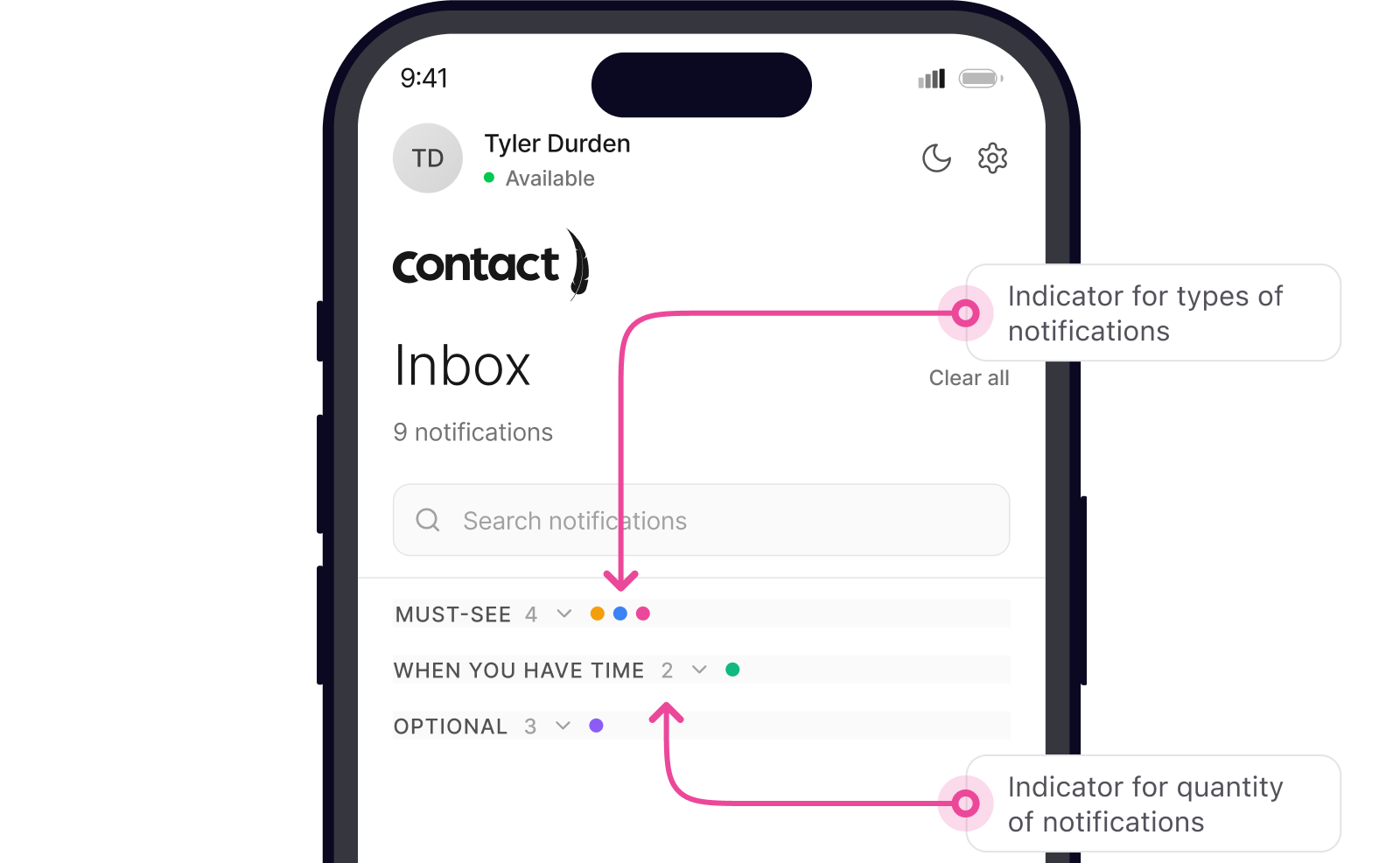
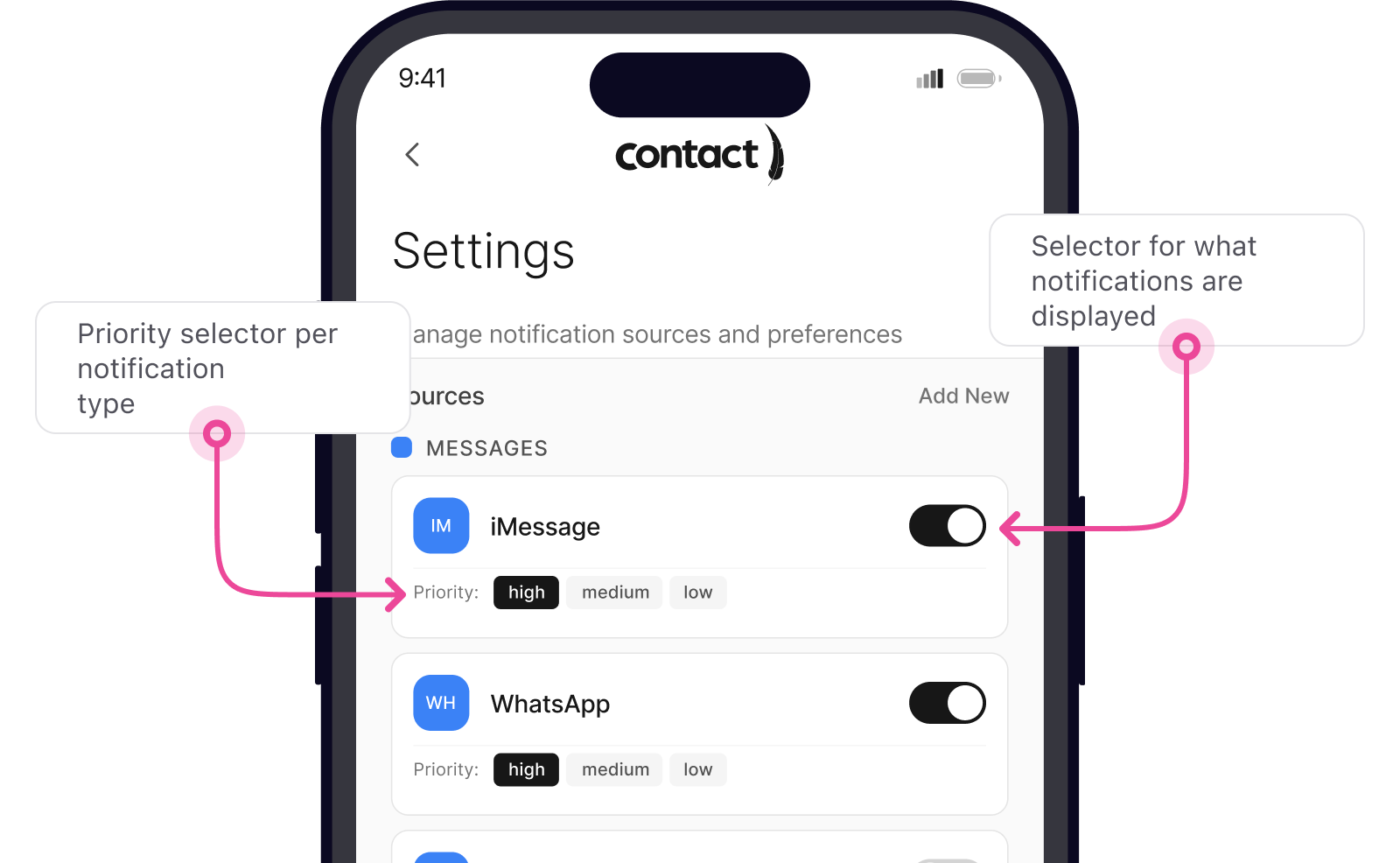
Contact acts as a central layer where messages from multiple channels surface in a clear hierarchy. Important relationships rise to the top, while lower-priority interactions remain visible without demanding attention. This keeps users informed without pulling them into endless feeds.
Contact tiers allow people to define availability based on relationship and context, rather than app defaults.
Key principles:
- Engagement feels better when it has structure
- Availability works best when it's intentional
- Visibility doesn't have to equal urgency
What I focused on
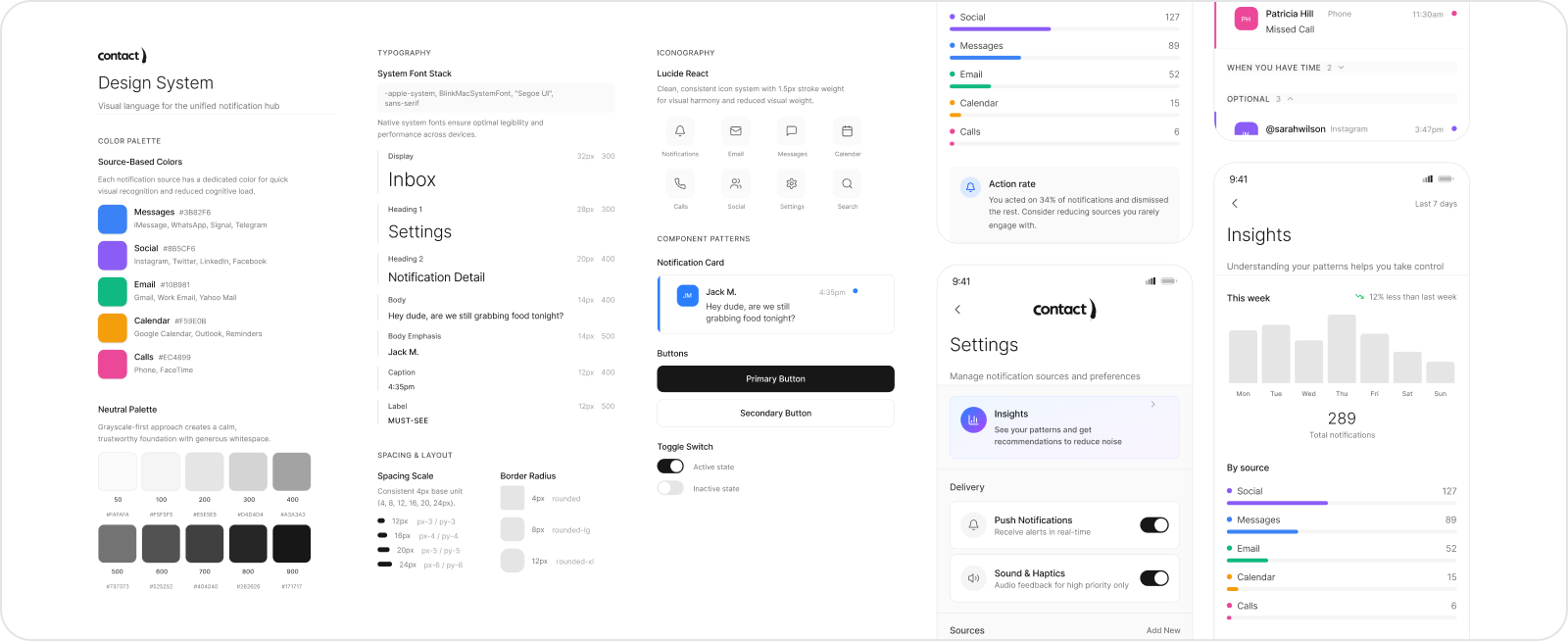
- Designing a system, not another inbox
- Keeping default states calm and readable
- Avoiding patterns that reward urgency over relevance
- Giving users control without requiring constant engagement
Validation and iteration
Early concepts were walked through with peers. Feedback consistently landed in two places:
- Relief at seeing fewer, clearer signals
- Concern when control felt too manual
That feedback pushed the design toward:
- Strong defaults
- Fewer visible controls
- Progressive disclosure of settings
Final Insights
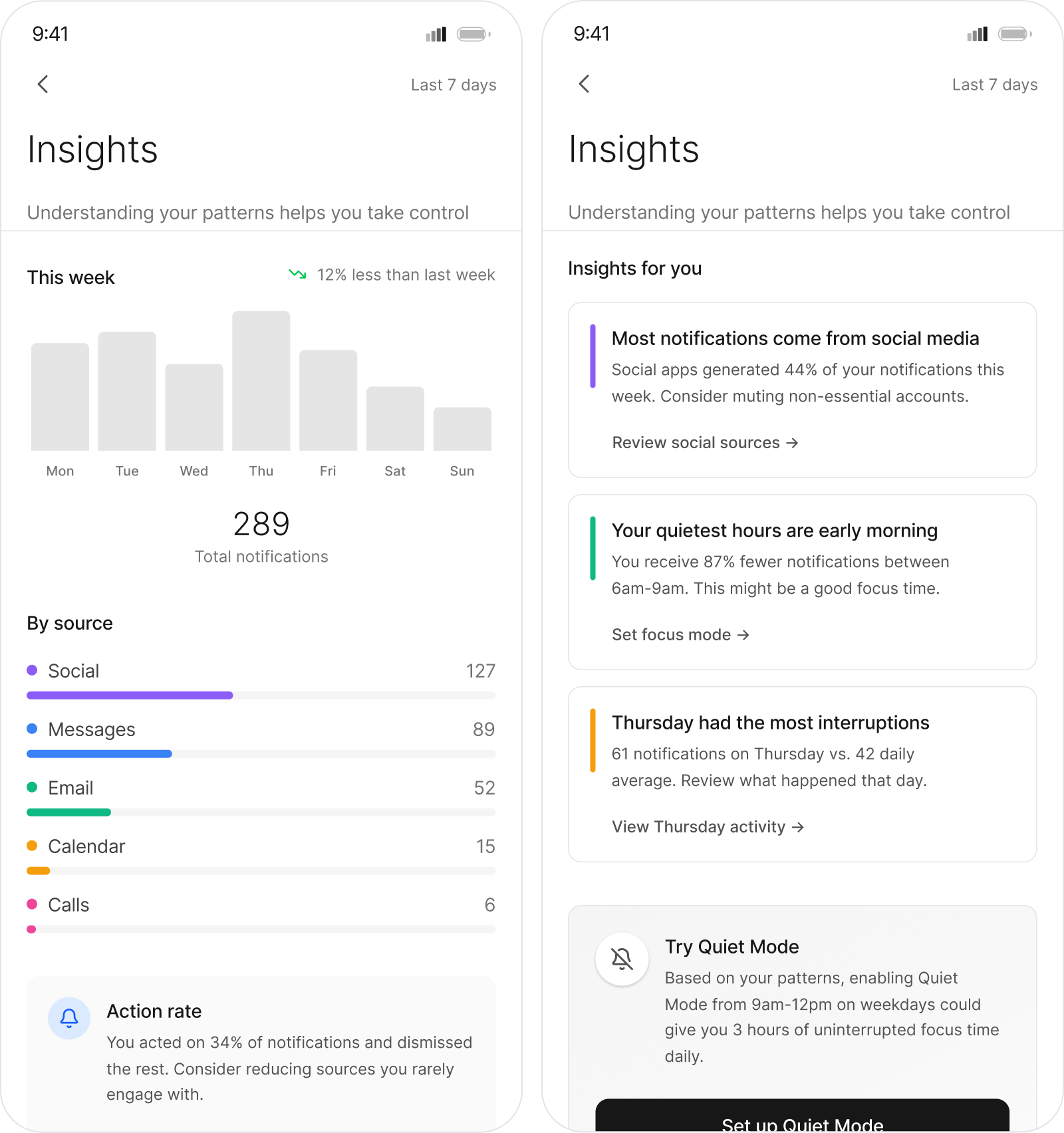
Our phones currently have features that remind us of how much time we spend using them, which is helpful. What's lacking is insight into how much time our phones are using us.
The Insights dashboard in Contact reframes usage from "screen time" to "attention taken," helping people understand and adjust how often they're pulled away from the world by their phones.
Outcome
Contact was never intended to ship. Its value was in clarifying how unified communication systems often fail by trying to do too much at once.
The project sharpened my approach to hierarchy, restraint, and trust in interface design.
Reflection
Good communication tools don't make people more available. They make connectivity intentional.