
Foodsmart
Design across patient experience, internal tooling, and foundational systems in a regulated healthcare environment to build clarity where none existed.
Scope of work
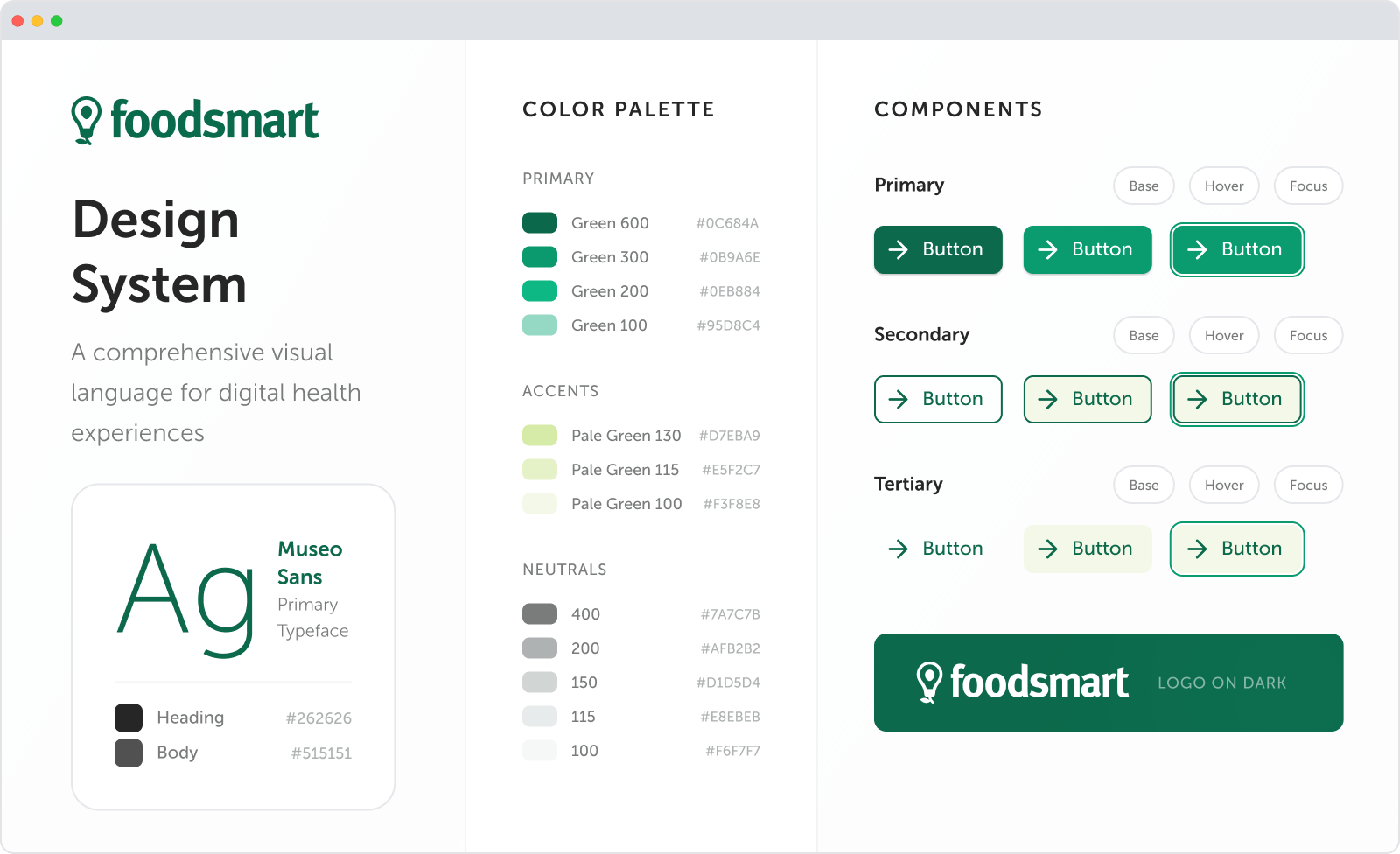
- Design system and shared component library used across product and marketing
- Patient-facing product experiences (web, scheduling, email)
- Internal tools supporting clinicians, operations, and reporting
- Data visualization standards for complex health and operational metrics
- Company rebrand and visual identity applied across digital, print, and physical touchpoints
- Accessibility and consistency standards across digital surfaces
- Cross-functional design processes, critique rituals, and team collaboration
What I focused on
- Reducing friction for patients without oversimplifying their needs
- Giving internal teams tools that made good decisions easier
- Designing reusable systems instead of one-off solutions
- Translating complex health and operational workflows into clear, approachable visuals
- Creating structure that allowed teams to move faster with confidence
- Treating accessibility, privacy, and regulatory requirements as foundational constraints, not edge cases
- Knowing when to design and when to step back to let systems guide decisions
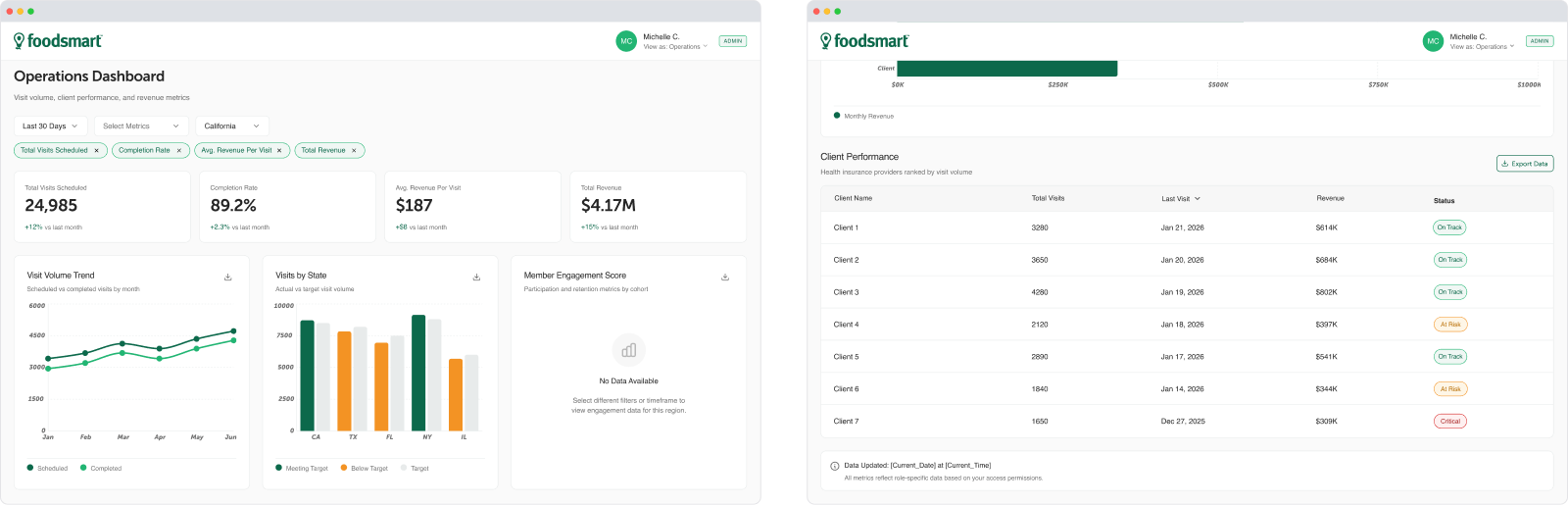
Reporting before

Reporting after
Approach
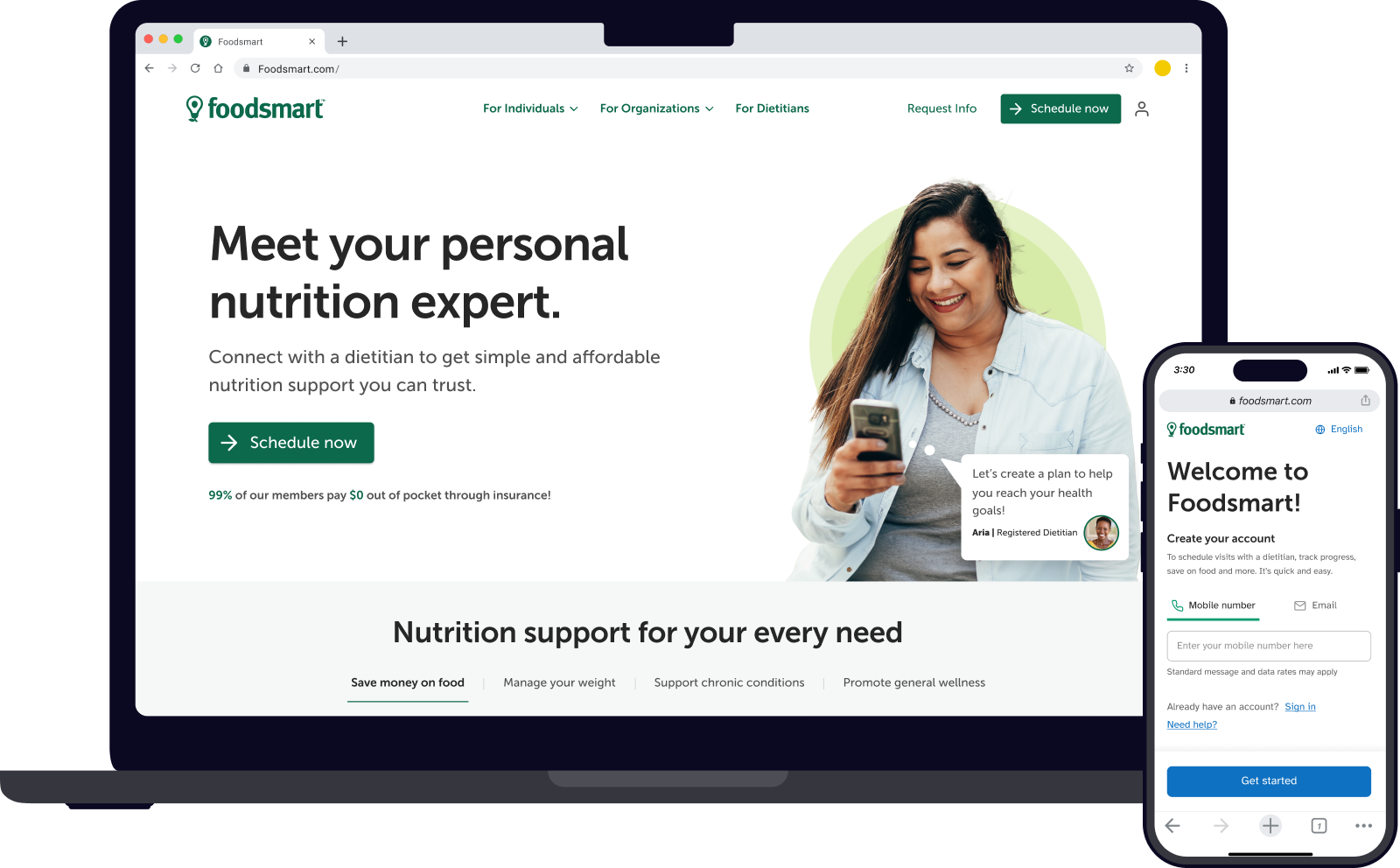
Foodsmart was scaling rapidly, but the brand and products had evolved in fragments. The digital patient experiences were disjointed. The website funneled every action to scheduling without providing value. Internal reporting relied on third-party tools that couldn't scale with the business.
The work wasn't about iterating features, it was about establishing foundations.
- Unified digital patient experiences across web and portal
- Rebuilt the website to serve distinct user journeys instead of a single conversion
- Transitioned all operational reporting from external vendors to custom internal tools
- Created a unified visual identity and applied it across all digital, print, and physical touchpoints for the first time
- Treated accessibility, privacy, and regulatory compliance as baseline requirements not additions
The result was a coherent brand and product ecosystem that could scale with the team.
Impact
The most meaningful outcome wasn't a single feature or launch. It was consistency in language, structure, and operations that reduced friction across the system. Products were easier to use, easier to trust, and easier to evolve.
That consistency played out in measurable ways:
- Improved conversion and completion rates across patient-facing flows
- Increased engagement and time on page through clearer content hierarchy and visual cues
- Faster decision-making for internal teams thanks to standardized reporting and dashboards
- Reduced design and engineering rework as components and visual patterns stabilized
- Stronger brand presence across patient and partner touchpoints through cohesive identity and messaging
Everything began to feel intentional rather than accumulated.
Reflection
Foodsmart was my first role where I wasn't just designing features, I was building the infrastructure that made future design possible. That shift from "what should this button look like" to "how do we make decisions about buttons across the entire product" fundamentally changed how I think about design work.
The challenge wasn't any single screen or flow. It was figuring out how to bring coherence to a fragmented system while the business was actively scaling. Every decision had to work today and hold up six months later when the team doubled and the product expanded. That constraint taught me to design systems that could absorb growth without breaking.
It really reinforced the trope that the best design work is often invisible. Nobody notices when components are consistent or when workflows feel intuitive, but they notice when things don’t work properly. Building that invisible consistency across patient experiences, internal tools, and brand touchpoints showed me that systematic thinking amplifies impact more than any individual feature ever could.
 foodsmart.com